The Purse Forum is an example of how online communities are popping up to help consumers discern the authentic from the fake. As detailed in this article by Amanda Kwan of the Associated Press, the Purse Forum provides a web community-based authentication service of experts - lovers and connoisseurs of luxury handbags. Registered users of the forum post pictures and details of suspected counterfeits by brand, with members of the forum providing feedback and rationale on whether the handbag in question is real or fake.
The brands discussed on the Purse Forum evoke strong feelings of loyalty, which in turn engender a dedicated community. Unpaid monitors patrol the discussions, while the community responds quickly to members seeking authenticity opinions. In addition to authentication, the Purse Forum allows its members to "show off" their handbag collection, as well as share electronic coupon codes for trusted internet retailers such as Bluefly, eLuxury, Neiman Marcus and many others.
Check out both Kwan's article and the Purse Forum for this example of an organic, community-based anti-counterfeiting initiative.
Showing posts with label how to spot a fake. Show all posts
Showing posts with label how to spot a fake. Show all posts
Wednesday, 25 June 2008


Tuesday, 1 April 2008
How to Spot Fake Fragrance & Suglasses
 The UK's Daily Mirror just alerted their readers to the dangers of counterfeits by writing a short 'How to Spot a Fake' piece in their Sunday Consumer section. The Authentics Foundation thought we'd share with you some of their tips:
"Sunglasses
Sunglasses are seen as an easy target by counterfeiters, as consumers are attracted by the promise of "designer" versions at bargain prices.
The dangers: Fake designer shades are unlikely to provide protection against UV rays, which can permanently damage your eyes.
How To Spot A Fake: Watch out for "designer" sunglasses sold unpackaged or in flimsy, unmarked plastic sleeves. Test the hinges, which are inferior in fakes, and examine the designer name - often you can just scratch it off. A lack of the peel-off certificate proving UV protection is another pointer.
Perfume
If you're planning to buy perfume, stick to trustworthy shops, chemists and department stores or look out for legitimate bargains at airports.
The dangers: Counterfeit perfume can often burn your skin or leave you with a rash. Tests on some have found them to contain urine.
How To Spot A Fake: Be wary of products with lowquality packaging, no logos, or misspelt brand names. As perfumes are highend products, they're mostly sold in reputable outlets - not from a suitcase."
Read the full story herePhoto Credit
Wednesday, 19 December 2007
Find and Report Counterfeit Coach
Coach has strengthened their name as a quality leather goods company in the past decade, and consumers are simply crazy about everything from their logoed purses to keychains. The problem with Coach knockoffs is as big as any other at present, and it's good to stay aware of a few things that make Coach products so special.

Want to report a fake Coach product? To report counterfeiters, please call the counterfeit hotline at (800) 396-1807 or e-mail information to Counterfeits@coach.com.
You can remain anonymous if you wish. Click here to learn more about reporting Coach counterfeits.
Photo Credit
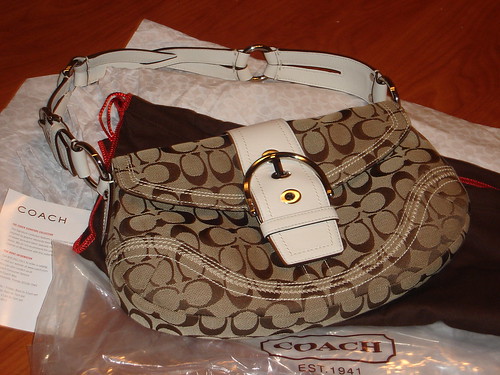
- Know your abCs: The CC logo Coach has become famous for is done in a particular style on each bag. Beyond familiarizing yourself with the font of the C, remember that Coach takes pains to line up the Cs in the middle. See Bag Bliss' "How to Spot a Fake Coach Bag" for pictures of fakes vs. the real thing.
- Dust Bags: The dust bags for Coach products are a deep chocolate brown, with orange trim. We just love putting our wristlets back in their chic cases, and the flimsy white dust bags for copies do not compare.
- Glue vs. Stitching: Coach stitches all of their authenticity and logo tags in the interiors of their bags. Often, fakes have giveaway glue seeping outside the authenticity tags.
Want to report a fake Coach product? To report counterfeiters, please call the counterfeit hotline at (800) 396-1807 or e-mail information to Counterfeits@coach.com.
You can remain anonymous if you wish. Click here to learn more about reporting Coach counterfeits.
Photo Credit
Monday, 17 December 2007
Carried Away with Imitation Luxury
 For this writer, Goyard once represented the kind of quiet, enduring luxury brand owned by those in the know. Unfortunately (or fortunately, if you are in accounts at the company), the 144-year-old luggage maker has become utterly ubiquitous in New York City as of late. Since Barney's began trumpeting their St. Louis totes a year or so ago, everyone has wanted a canvas bag inscribed with the Parisian company's "Y" design.
But with serious popularity come serious threats of counterfeiting, cooing at the design-conscious from carts off Fifth Avenue.
Writer and product designer Peri Wolfman sat down with the New York Times to discuss why she had been craving the status bag, and why considerations for a fake were not out of the question. After some thought, Ms. Wolfman emphasized avoiding "those shoddy pretenders now bargain priced at $40 that are popping up around Midtown. The discerning are quick to spot the replicas’ vinyl handles and piping, which are far less pliable than Goyard’s signature luggage leather and the leather trim on the best of the quality knockoffs.
At lunch with friends not long ago, she compared her classy counterfeit with their originals. “We looked at the details, the lining, the stitching,” she recalled. “I promise you, you couldn’t tell the difference.”
Such assertions do not amuse Maison Goyard, the 144-year-old Parisian luggage maker that prides itself on pedigree. “Goyard is fully committed to its brand protection,” said Charlotte Letard, a company spokeswoman. She added that the company is addressing the issue of street vendors through targeted civil seizure orders, and is working closely with Customs to seize counterfeit merchandise." [Read full story here.]
Some guidelines for purchase are:
- Dealer: You are always encouraged to buy through reputable channels. In New York City, Goyard bags are sold exclusively at Barneys and Bergdorf Goodman.
- Sheen: Just as cheap patent leather is far shinier than that of better quality, the sheen on fake bags can be much more striking than the originals.
- Interior Lining: Goyard is renowned for its use of a unique linen, cotton and hemp material which it lines it's luxury bags in. The cloth is durable, and markedly different from the flimsy cotton counterfeiters have been using to imitate the original.
- Stitching: As always, stitching is what sets apart a luxury bag from a factory produced replica. Are the straps crooked? Does the stitching match the bag or is the seam white as it should be?
- Too cheap to be true: If a "luxury item" in the Goyard range is being offered for considerably under a $700 price tag (where the line begins), there is a reason.
Monday, 5 November 2007
The Alligator Bites Back: Lacoste Ramps up Anti-Counterfeiting
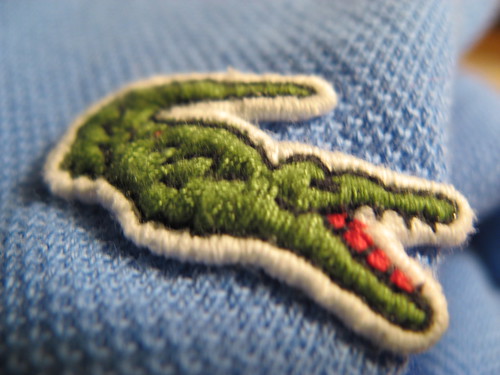 The allure of Lacoste has endured since its inception in 1933 by tennis great Rene Lacoste. Once indicating a modicum of authentic preppy style, it's now been adopted by consumers of all style preferences. As with any brand of note, Lacoste has seen counterfeits produced everywhere from Thailand to South America. In fact, the company just seized $1 million worth of phony polo shirts in Puerto Rico. Even more recently, Lacoste has increased it's focus on counterfeit production in Vietnam, where the company is working with local police in Hanoi to stamp out the problem.
One common myth concerning this alligator-embellished merchandise is that product being sold more cheaply on the internet or on the street is authentic but simply has a few "flaws" that barred it from being sold in official stores.
"With global sales of 45 million T-shirts, some errors surely occur during the production process," says Christian London, Lacoste's legal manager. "However, this volume of goods is separated and just a small part of it is sold at Lacoste shops."
As Mr. London notes, any merchandise with slight errors is sold at any number of official factory outlets Lacoste runs throughout the world, in places like New York's outlet center Woodbury Commons. Never is it cast off in such a way that it's accessible to local merchants or unofficial online vendors. Be aware that any merchandise being sold under this guise is questionable at best, and most likely counterfeit.
You can find more info on Lacoste merchandise in the e-auction world here.
Our own guide to staying away from fakes:
- Use official commercial channels. Buying the product in the store allows for warranty and guaranteed authenticity.
- Buttons: The first thing counterfeiters skimp on is price, and with it, quality. Lacoste shirts are renowned for their mother of pearl buttons. Since mother of pearl is a naturally occurring organic compound, no two buttons will ever look alike in terms of sheen and pattern. Also, authentic buttons are free from any lettering.
- Unlock the code: Official codes in your merchandise are unique. Counterfeits generally have a generic code (one such example is 8558).
- Crocodile: We have seen all manner of absurd versions of the illustrious croc, but usually consumers know the real thing when they see it. Fakes can be lopsided, pointing too far up or down, or have a number of other giveaways discussed here.
Subscribe to:
Posts (Atom)
